
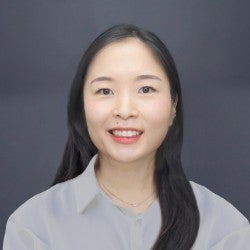
 Ms Haegyeong Hong
Haegyeong (Hae) Hong is a PhD candidate at the University of Queensland. Her research focuses on identifying dominant ideologies and cultural values embedded in texts and visual images of North Korean English textbooks by using the methods of Critical Discourse Analysis (CDA) and Visual Image Analysis (VIA). Hae has presented at several international conferences and served as the primary organiser and editor for international conferences at the UQ Korean Studies Centre. Hae is also a casual tutor and a course coordinator at the University of Queensland for Korean language and culture courses including LTCS2023: Korean Popular Culture.
Current Project
Cultural Ideologies and Values in English textbooks used in North Korea: A Critical Discourse Analysis
This study investigates the dominant ideologies and cultural values in English textbooks used in North Korea. Utilising the method of critical discourse analysis (CDA) and visual image analysis (VIA), it critically analyse English textbooks used in North Korean middle schools (junior middle schools and senior middle schools). This study aims to reveal the dominant ideologies and values embedded in the texts and visual images, and their possible impact on the learner’s idea of the outside world as well as their own society as dominant cultural ideologies, values, and beliefs are conveyed to learners via the hidden curriculum and selective traditions within texts and visual images of textbooks.
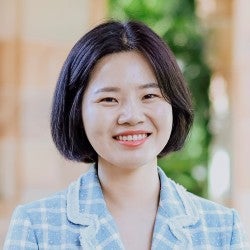 Ms Dabin Kang
Dabin Kang is a PhD candidate at The University of Queensland whose research focuses on environmental education in Korean and English language textbooks. Drawing on Critical Discourse Analysis (CDA) and Visual Image Analysis (VIA), the research examines how environmental knowledge, values, and behaviours are represented through language and visual images, with particular attention to underlying ideologies and power relations. Her broader research interests include textbook analysis, environmental literacy, critical curriculum studies, and ethnic minority education. Alongside her doctoral research, Dabin teaches Korean language courses at the university.
Current Project
Environmental Education in Korean and English Language Textbooks: A Comparative Study of Chosunjok and South Korean Textbooks
This study investigates how environmental education is represented in Korean and English language textbooks used by Chosunjok communities in China and in South Korea. Drawing on the concept of environmental literacy, the study examines how environmental knowledge, affective engagement, and environmentally responsible behaviour are presented through written texts and visual images. Using Critical Discourse Analysis (CDA) and Visual Image Analysis (VIA), it further explores the underlying values, perspectives, and ideologies embedded in textbook representations of environmental issues. Through a comparative analysis of the four textbook groups, the study aims to identify similarities and differences in how environmental literacy is constructed across different linguistic, cultural, and educational contexts.
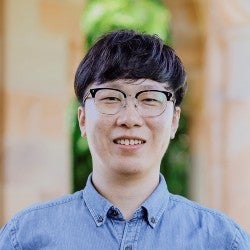 Mr Jung Soon Kim
Jung Soon Kim is a PhD candidate at the University of Queensland. His thesis titled "The influence of ethnic Korean churches on heritage language and identity maintenance among 1.5 and 2nd generation Koreans in Brisbane" explores the role of the ethnic Korean church in Australia and its influence in heritage language and ethnic identity among 1.5 and 2nd generation Koreans. He also is a casual tutor for several Korean courses.
Current Project
The influence of ethnic Korean churches on heritage language and identity maintenance among 1.5 and 2nd generation Koreans in Brisbane
This study examines the role of ethnic Korean churches in Brisbane in the maintenance of heritage language and the formation of cultural identity among 1.5 and 2nd generation Korean youths in secondary education. Adopting a mixed-methods approach, this study combines quantitative insights from surveys with qualitative data from interviews to examine the relationship of the ethnic church, family language policies, and heritage language and identity maintenance among 1.5 and 2nd generation Koreans. The quantitative survey administered to high school students (yr7-12) captures broader patterns of language proficiency in Korean and English, frequency of language use across different social domains.
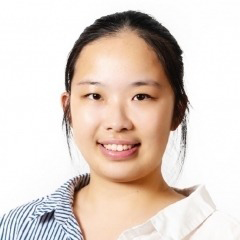 Ms Qunyi Wang
Qunyi Wang is a PhD candidate at The University of Queensland and has worked as a research assistant in the School of Languages and Cultures since 2020. She graduated with First Class Honours in Korean in 2023. Her research examines Chinese language textbooks used by ethnic Korean students in China, focusing on cultural values, ideology, and national identity. She has published two peer-reviewed articles in Q1 and Q2 journals and presented her research at Korean Studies and Asian Studies conferences in Australia. She currently teaches Chinese at the School of Languages and Cultures at the University of Queensland.
Current Project
Critical analysis of primary Chinese language textbooks for ethnic Korean students: Cultural values and national identity
This study conducts a comparative analysis of primary Chinese language textbooks for Korean Chinese students (2002 and 2022 sets), examining the cultural values and ideologies embedded within them, their role in shaping national identity, and how these elements have evolved alongside shifts in China’s political climate. Adopting Multimodal Critical Discourse Analysis (MCDA) and the Discourse Historical Approach (DHA), the study investigates: (1) what cultural values and ideologies are embedded in these textbooks; (2) how they construct national identity for Korean Chinese students; (3) similarities and differences between the two textbook sets; and (4) whose voices and perspectives are excluded.
 Ms Xueying Feng
Xueying Feng is a PhD candidate at the University of Queensland. Her research focuses on identifying dominant ideologies embedded in texts and visual images of second or foreign language textbooks by using the methods of Critical Discourse Analysis (CDA) and Visual Image Analysis (VIA). Xueying has a particular research interest in cultural and ecological representations in Chinese and Korean language textbooks. She has published two articles in peer-reviewed journals. Xueying is also a casual tutor at the University of Queensland for Chinese language and culture courses including CHIN2600: Essentials of Chinese Language in Social Life.
Current Project
The cultural and ecological representation in Chinese and Korean language textbooks
This study aims to examine how cultural and ecological elements are represented in Chinese and Korean foreign language textbooks and how such representations reflect underlying ideologies. Content analysis, critical discourse analysis, and visual image analysis will be utilized to analyze the textual and visual content in the textbooks. Interviews with students will further explore how they interpret and respond to these representations. A comparative analysis of Chinese and Korean textbooks will then identify similarities and differences in their ideological constructions. Ultimately, the study seeks to reveal whose interests are served through textbook content and how particular ideologies are constructed and legitimized.
 Lara Atkinson
Bachelor of International Studies
- Majoring in Korean and International Relations
Lara's interest in Korea began in high school, where she developed a strong appreciation for Korean language, history, and culture. This passion inspired her to continue studying Korean at university as one of her majors as a part of her Bachelor of International Studies degree.
"One of the highlights of my degree was completing a semester abroad at Korea University in Semester 2, 2025. Living and studying in Seoul allowed me to immerse myself in Korean society, strengthen my language skills, and gain a deeper understanding of Korea's culture and global influence. The experience also gave me valuable insight into intercultural communication and international engagement. Studying Korean has been one of the most rewarding aspects of my university journey. It has broadened my perspective, connected me with people from diverse backgrounds, and reinforced my goal of pursuing a career that allows me to work in Korea and engage with the region professionally in the future."
 Jessica Yang
Bachelor of Communication / Arts
- Majoring in Korean
Jessica’s interest in South Korea originated from its feminist movements and Korean feminism in general. Whilst she enjoys Korean music and other forms of Korean media regularly, she delved into Korean feminist literature in 2026 to explore and better understand her interests further.
Jessica is currently studying Korean as one of her majors since her second year of university as learning a concrete skill could be beneficial for a potential career in diplomacy or the international space of East Asia.
"I found the introductory Korean course at UQ to be practical in setting up a solid foundation in the language, especially after beginning private tutoring, following a semester of university coursework. The knowledge taught in Korean courses at UQ allowed me to engage with Korean media and texts on a more direct level despite only at beginner proficiency, and the engagement in turn facilitates my learning."
Jessica has applied to study and exchange in Seoul in 2027 to undergo intensive language training and is looking forward to further developing her Korean literacy whilst understanding the culture better and meeting like-minded individuals.
 Blair Williams
Bachelors of Business / Arts 2013
- Majored in Korean
Copywriter, Marketing Strategist and TV Personnel
After graduating, Blair started working full time at a digital marketing agency in Seoul, South Korea.
"Working at the agency has been a really great opportunity for me. I have a natural interest in fashion, technology, and social media, so being able to work in an environment that combines all three is great."
Blair also featured in a popular Korean talk show “JTBC Abnormal Summit” (비정상회담) as an Australian representative. Blair was one of many non-Korean male panellists from all around the world who appeared on the show that had a viewership over 12 million.
"I think in our globalizing world, having a second language under your belt is not only beneficial economically, but also culturally. It helps you to broaden your horizons, gives you a new perspective on your own culture and country, and is one of those really tangible forms of study that you can take out and use in the everyday. Without having studied Korean, I don't think I would have come to Seoul in the first place, which is something I can't really imagine. Having the language education that I did, it's really given me so many opportunities in areas I wouldn't have looked at. The TV show, for example, is a direct result of the Korean education I received both at UQ and here in Korea."
 Nurul Naqiela Mohamad Suhaili
Bachelor of Arts (Sports Studies) 2021
- Minored in Korean
"Learning Korean at UQ opened doors to many unexpected opportunities. With an excellent lineup of lecturers and professors, the journey was both enriching and seamless, supported by a well‑designed and structured curriculum. Although it was only a minor course, it significantly deepened my understanding of the language and its pedagogy."
Naqiela continued her Korean studies after graduating from UQ by enrolling in an online course offered by Yonsei University, South Korea and attending private classes. This allowed her to maintain momentum and further enhance her Korean language proficiency.
"Learning a new language is never a waste. I am now working in the education industry at a reputable international enrichment centre in Malaysia, and I am proud to have successfully assisted diverse customers, including providing translation services for Korean clients. In addition, I also conduct private tutoring for Koreans residing in Malaysia who are interested in learning Malay or English, further enhancing my cross cultural teaching and communication skills. If you come across this and thinking to learn Korean, consider today your Day 1!"
 Isabelle Warpenius
Bachelor of Arts & Diploma of Languages 2023
- Majored in Linguistics and Korean
ESL Teacher
After graduating, Isabelle moved to South Korea and worked as an English teacher in Daegu, guiding the language development of over 80 primary school children. She is currently completing a Masters of International Security at Curtin University, Australia.
“Studying Korean was by far my favourite part of my degree. I have learnt several languages over the course of my career, and the Korean department was the most welcoming, and was committed to cultural and linguistic education. I would like to thank Dr Narah Lee, who supported me throughout my studies and fostered my love of the Korean language. I really valued Contemporary Korean society and culture (LTCS3010), which gave me a broader understanding of Korean society and helped ease my transition to living in South Korea. I absolutely loved teaching in Korea, my students were wonderful and I was lucky to have a supportive workplace. My Korean language skills gave me the opportunity to make Korean friends and explore parts of Korea outside of the mainstream. My knowledge of Korean has led me to focus my postgraduate research on South Korean international relations. After graduating, I aim to apply my skills in Korea-Australia relations."
 Marie Claire Rwigema
Bachelor of Communications / Arts 2024
- Majored in Korean (Extended Major)
Marie studied Korean language and culture as an extended major at UQ and also interned as a social media strategist at a cosmetic company in South Korea during her studies.
"Having done 3 years of formal Korean language studies, I have developed a great and deep appreciation for the Korean culture. A defining highlight of my journey was my internship in Seoul with leading k-beauty brand for 3 and a half months. As an intern, I worked with a team that was leading to be a bridge between Korean cosmetic companies and the global audiences, and created accessible contents that explains and promotes k-beauty trends, brands, and products for the western medias."
Marie is continuing on her Korean studies journey by actively engaging with the Korean language materials, staying up to date on emerging developments in the k-beauty and media sectors, and exploring new avenues to foster cross-culture connections.
 Dominick Kong
Bachelor of Science (Food Science and Nutrition) 2024
- Minored in Korean
Dominick is completing a Master of Food Science and Technology at the University of Queensland. Alongside his studies in food science, he has maintained a long-standing interest in Korean language and culture and has studied Korean at UQ.
For Dominick, learning Korean has extended beyond the classroom. His studies have not only developed his language skills but also given him a deeper understanding of Korean culture, communication, and everyday life. At UQ, he has been actively involved in Korean-related student societies, activities and cultural events, providing opportunities to engage with the Korean community and apply what he has learned at UQ in meaningful, real-world settings.
Outside university, Dominick has also worked in Korean-speaking environments, where he has been able to use Korean in everyday interactions. These experiences have strengthened his confidence in communicating across different cultural settings and shown him the practical value of language learning.
"As I complete my postgraduate studies, I hope to continue developing my Korean proficiency alongside my professional background in Food Science and Technology. I believe that Korean will broaden my future career opportunities and strengthen my ability to communicate effectively in multicultural environments while continuing to enrich the understanding of Korean language and culture."
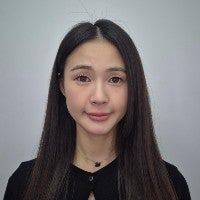 Yoo Jin Song
Bachelor of Arts (Honours - Class I) 2025
- Majored in Korean Studies
Yoo Jin majored in international relations and minored in Korean studies and political science in 2023. Then, she continued her Korean studies journey through an honours degree and received first class honours in 2025 with a thesis "A Critical and Visual Discourse Analysis of North Korean English Textbook".
"Studying Korean at UQ provided me with the opportunity to develop my Korean language skills while gaining a deeper understanding of Korean culture, history, and society. My experiences at UQ also fostered my interests in Korean Studies and led me to pursue further research into North Korea and the role of language in shaping cultural and political perspectives."
Yoo Jin examined North Korean English textbooks published under Kim Jong Un’s leadership, analysing how cultural values and political ideologies are constructed through linguistic and visual elements for her honours research. Her current research interests include North Korean education, language and ideology, textbook studies, and multimodal discourse analysis.
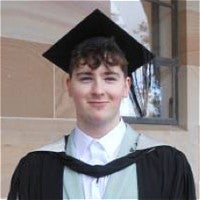 Xavier Smith
Bachelor of International Studies 2025
- Majored in Korean and International Relations
Student Administration Assistant BEL Faculty, UQ
Xavier started learning Korean at UQ in 2021 as a part of the language major under the Bachelor of International Studies.
“Learning Korean at UQ was enjoyable thanks to all the amazing professors that helped us all in our language journey. I was lucky to have many opportunities to learn and grow. I would particularly thank Dr Narah Lee for helping my Korean skills in speaking and presenting. I was also lucky to go on exchange to Yonsei University and Ewha University for the 2023 academic year. With my basis of Korean language from studying at UQ, I was able to flourish in my life in Korea while on exchange. I am currently using my Korean language skills to pursue an internship in Seoul for the autumn period. In tandem with my international relations major, I am developing expertise in policy and reporting regarding North Korean human rights issues. Learning Korean at UQ has set me up with the skills I need to work in an environment where understanding and using Korean is essential."