
Established in 2019, the Korean Studies Centre (KSC) operates within the School of Languages and Cultures at the University of Queensland (UQ). The Centre is dedicated to advancing scholarly research in Korean language, culture, history, and society. It also plays a pivotal role in developing sustainable partnerships with key stakeholders across the community, industry, and government sectors. Through these collaborations, the KSC contributes to a deeper, more nuanced understanding of Korea within the Australian context.
The KSC serves as a dynamic platform for interdisciplinary engagement, promoting Korean Studies both within academia and through public outreach. The Centre facilitates knowledge exchange through a wide array of academic and community-oriented activities, including an annual international conference and eight seminars each year. These events help cultivate dialogue on contemporary and historical issues related to Korea and its global diasporas.
In 2021, the KSC received a significant boost with a $1 million AUD grant from the Academy of Korean Studies, as part of its Core University Program for Korean Studies. This funding has enabled the Centre to expand its research agenda and invest in the development of future scholars, particularly Higher Degree by Research (HDR) students. The Centre's current research initiatives focus on:
The content and cultural narratives of textbooks from the Korean peninsula and Korean diasporic communities, with emphasis on nationalism, identity, and cultural representation;
Korean diasporic identity formation within the Australian socio-cultural landscape;
The evolving image of Korea and the Korean peninsula in global and regional discourses;
Historical depictions of Korea through archival documents, including letters and reports by Queensland and Australian missionaries from 1889 to 1945.
 AKS Funding
The Korean Studies Centre (KSC) has received substantial support from the 한국학중앙연구원 - Academy of Korean Studies (AKS) through the Korean Studies Promotion Service (KSPS). Following an initial Seed Program grant of approximately $160 000 AUD, the KSC was awarded approximately $1 million AUD under the Core University Program for Korean Studies for 2021–2026. This funding has played a central role in strengthening Korean Studies at UQ by supporting curriculum development, research and publications, international conferences and seminars, postgraduate research training, scholarships, academic staffing, and collaboration with universities and Korean Studies scholars in Australia and internationally. The grant has provided an important institutional foundation for the long-term development and sustainability of Korean Studies at UQ.
The Centre is co-directed by Honorary Associate Professor Jae-Hoon Jung and Associate Professor Dong Bae (Isaac) Lee, both affiliated with the School of Languages and Cultures. They emphasise the commitment of the centre in fostering both academic excellence and community engagement. Through public lectures, cultural programming, and rigorous academic inquiry, the KSC continues to establish itself as a vital hub for Korean Studies in the Asia-Pacific region.
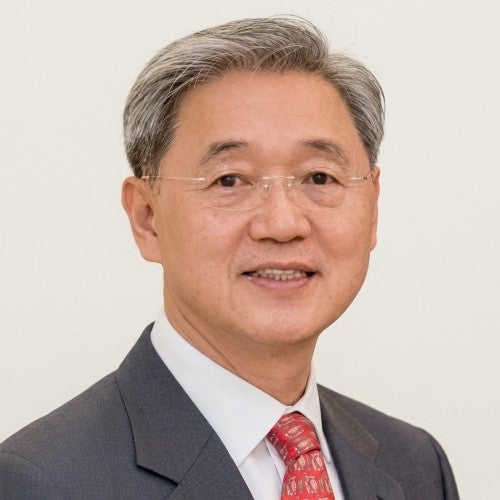 정재훈 H.A. Prof. Jae-Hoon Jung
Honorary Associate Professor Jae-Hoon Jung contributes to the establishment, development, and external engagement of the Korean Studies Centre (KSC) at The University of Queensland. As Co-Director of the Centre since its establishment in 2019, Professor Jung has worked closely with colleagues to strengthen Korean Studies at UQ and to develop the Centre as an important platform connecting academic research, education, government, industry, and the wider community.
A particularly important aspect of Professor Jung’s contribution has been his role in expanding the Centre’s Australia–Korea networks and external partnerships. From the establishment of the KSC, he emphasised the importance of increasing understanding of Korean society, language, history, and culture and of strengthening ties between Australia and the Republic of Korea. He has actively supported partnerships with Korean universities, research institutes, government-related organisations, and community groups, contributing to the Centre’s growing national and international profile.
Professor Jung has also played a major role in the Centre’s academic and public programs. He has chaired, moderated, and coordinated numerous international conferences, seminars, webinars, and public-engagement activities (e.g. 2021 International Webinar on Korean Studies, and 2023 international conference held at UQ ). He has contributed particularly to discussions concerning Korea–Australia relations, digital cooperation, Korean society and culture, language education, and broader developments affecting the Korean Peninsula.
Through his academic experience, extensive professional networks, and sustained community engagement, Professor Jung has helped strengthen the institutional foundation and visibility of Korean Studies at UQ. His continuing contribution has been especially valuable in building partnerships, facilitating knowledge exchange, supporting major Centre activities, and positioning UQ KSC as an active hub for Korean Studies and Australia–Korea engagement in the Asia-Pacific region.
 이동배 Associate Professor Isaac Lee
Associate Professor Dong Bae (Isaac) Lee is a scholar of Korean language education, Korean Studies, critical curriculum studies, and textbook research at the University of Queensland (UQ). Over more than two decades at UQ, he has played a significant role in the development of Korean language and Korean Studies education through curriculum innovation, research leadership, postgraduate supervision, international collaboration, and the establishment of sustainable academic networks across Australia and the Asia-Pacific region.
His interdisciplinary research brings together Korean language education, critical curriculum studies, textbook analysis, nationalism, identity, ideology, environmental education, citizenship, cultural representation, and critical discourse analysis. A central theme of his scholarship is the examination of how education, language, curricula, and textbooks construct particular understandings of national identity, ideology, citizenship, culture, and social values. His research approaches textbooks not simply as instructional materials, but as important cultural and ideological texts through which societies represent themselves, their histories, their values, and their imagined national futures.
Associate Professor Lee has published more than 45 peer-reviewed journal articles and book chapters and has authored and edited books with major international academic publishers. His research monographs include The Construction of Korean Culture in Korean Language Textbooks: Ideologies and Textbooks and The Politics of Korean Language Textbooks in the Two Koreas: Nationalism, Ideologies and Education. The latter provides a comparative examination of North and South Korean language textbooks, analysing how competing political systems construct nationalism, national identity, ideology, history, and conceptions of the Korean nation through educational discourse. His forthcoming edited volume, Nationalism, Identity and Ideology in Korean and Korean Diasporic Textbooks, further extends this research by bringing together scholarship on Korea and Korean communities in diverse national and diasporic contexts.
His more recent research has broadened this critical curriculum and textbook perspective beyond Korean Studies. He has developed comparative projects examining environmental literacy, environmental education, sustainability, citizenship, curriculum policy, English language education, and educational discourse across a range of Asian contexts. These projects involve collaboration with researchers working in countries including China, Vietnam, Pakistan, Saudi Arabia, and South Korea. Through this work, he has increasingly explored how global educational agendas—including sustainability, environmental citizenship, digital transformation, and internationalisation—are recontextualised within different national, cultural, political, and educational systems.
At UQ, Associate Professor Lee has also made a sustained contribution to the institutional development of Korean Studies. He has served repeatedly as Discipline Convener for Korean and has held leadership roles in the UQ Korean Studies Centre, including as Co-Director. Through these roles, he has worked to strengthen Korean Studies not only as a language-teaching program but as an interdisciplinary field connecting language, history, politics, culture, media, education, tourism, and international relations.
A major part of this work has been his leadership of the Academy of Korean Studies Core University Program for Korean Studies at UQ. The project has supported the expansion of Korean Studies teaching and research, postgraduate training, academic staffing, international conferences, research seminars, publication projects, and collaboration with universities throughout Australia, Asia, and beyond. Under this initiative, Korean-related content has been incorporated into a wider range of UQ courses outside the Korean language program, helping to embed Korean Studies across several disciplinary areas and to broaden student engagement with Korea.
Associate Professor Lee has also placed particular emphasis on postgraduate research training and the development of emerging scholars. He has supervised multiple PhD and research higher degree students working on Korean Studies, curriculum studies, textbook analysis, language education, ideology, identity, and related fields. Five of his PhD candidates have successfully completed their degrees, while he continues to supervise a number of current higher degree researchers. His approach to supervision places strong emphasis on developing students not only as thesis researchers but also as independent scholars capable of publishing internationally and participating in global academic networks.
This emphasis on research mentoring has resulted in a growing number of collaborative publications with postgraduate researchers and recent graduates. Since 2022, his collaboration with HDR students and PhD graduates has contributed to six co-authored publications in Q1 and Q2 journals. These collaborations are part of a broader commitment to building the research capacity, academic confidence, and international publication experience of early-career scholars.
Associate Professor Lee has also been active in creating international scholarly platforms. Through the UQ Korean Studies Centre, he has organised and contributed to major international conferences, postgraduate conferences, seminars, webinars, and research forums involving scholars and universities from Australia, Korea, Asia, and other regions. These activities have provided opportunities for established scholars, early-career researchers, and postgraduate students to exchange research, develop collaborations, and expand international networks in Korean Studies and related interdisciplinary fields.
His academic leadership combines research, teaching, supervision, and institution-building. Rather than treating Korean Studies as a narrowly defined area of language or area studies, his work seeks to connect Korean Studies with broader questions concerning nationalism, identity, education, environmental sustainability, migration, diaspora, ideology, citizenship, cultural diplomacy, and social change. This interdisciplinary orientation has enabled him to develop collaborations across multiple fields and national contexts.
Through his research, teaching, supervision, international collaboration, and leadership of the UQ Korean Studies Centre, Associate Professor Lee continues to contribute to the long-term development and sustainability of Korean Studies in Australia. His work is particularly concerned with strengthening the next generation of researchers, expanding interdisciplinary and comparative research, increasing international scholarly collaboration, and positioning UQ as an important regional centre for Korean Studies education and research in Australia and the wider Asia-Pacific.
4 February 2026
 뉴스N제주 NewsNJeju
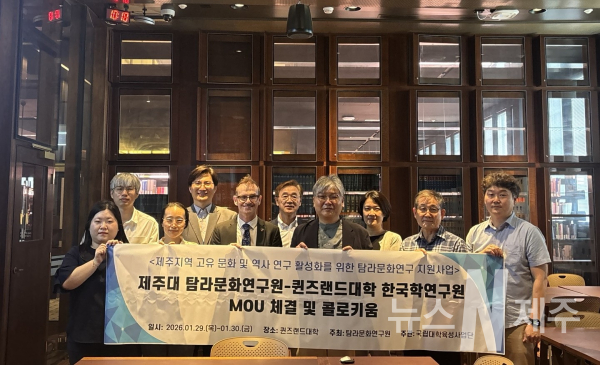
제주대학교 탐라문화연구원, 호주 브리즈번 현장조사 실시 (Korean)
10 July 2025
 한국외국어대학 Hankuk University of Foreign Studies
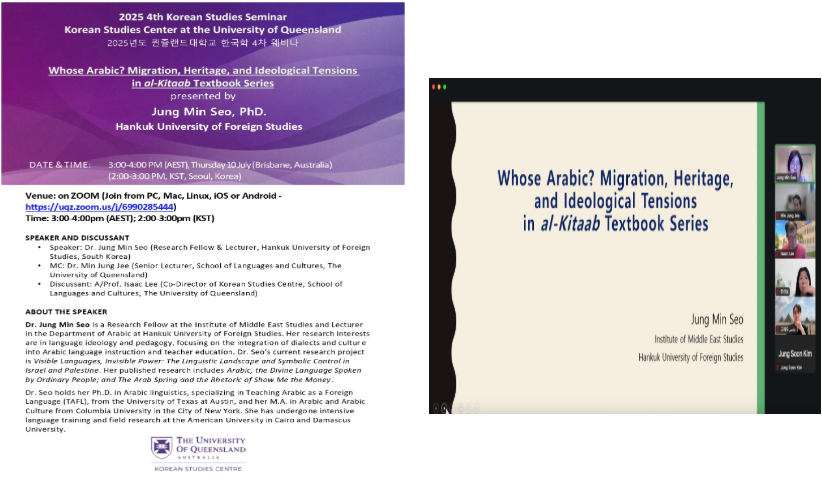
호주 퀸즐랜드 대학교 한국학 센터 주최 '2025년 제4차 웨비나'에서 강연 (Korean)
23 February 2025
 통일인문학연구단
The Institute of Humanities for Unification
건국대학교 인문학연구원과 호주 퀸즐랜드대학교 한국학센터 상호협력 업무협약 체결식 (Korean)
21 February 2025
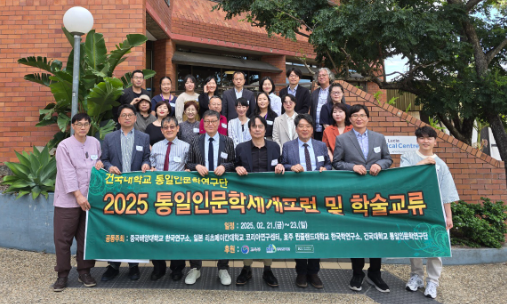
통일인문학연구단
The Institute of Humanities for Unification
2025 통일인문학세계포럼 "코리언 평화공동체를 위한 지성사적 가치지향과 공존 가능성" 개최 (Korean)
[2025 통일인문학 세계포럼] <코리언 평화공동체를 위한 지성사적 가치지향과 공존 가능성> (Korean)
30 April 2024
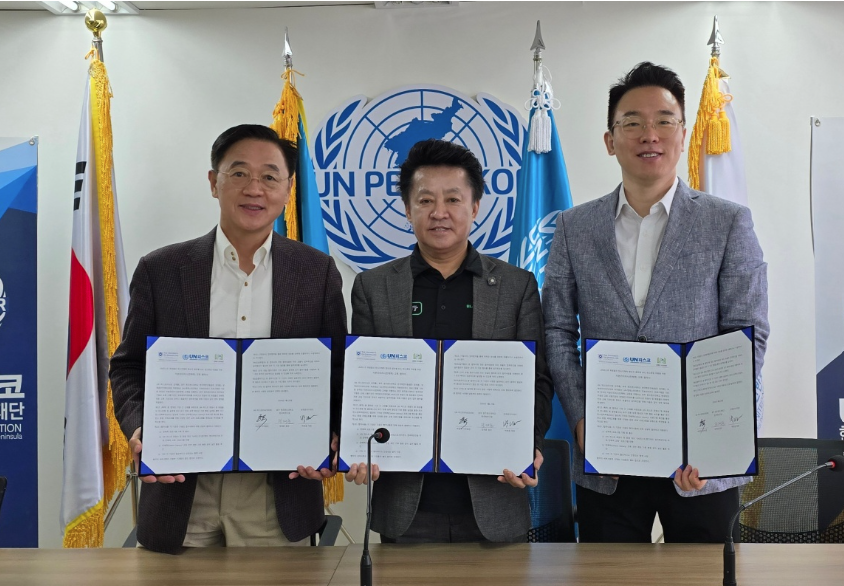 UN피스코 UN Peace Kor
UN피스코, 넷제로 아카데미-호주 퀸즈랜드대학교 한국학연구원과 교육협력 협약 체결 (Korean)
7 December 2023
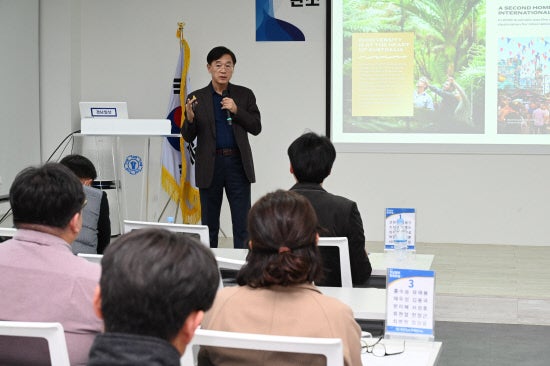 경남일보 Gyeongnam News
[3기 경남일보 경제포럼]6강 정재훈 호주 퀸즈랜드대 한국학연구원 원장 (Korean)
30 October 2023
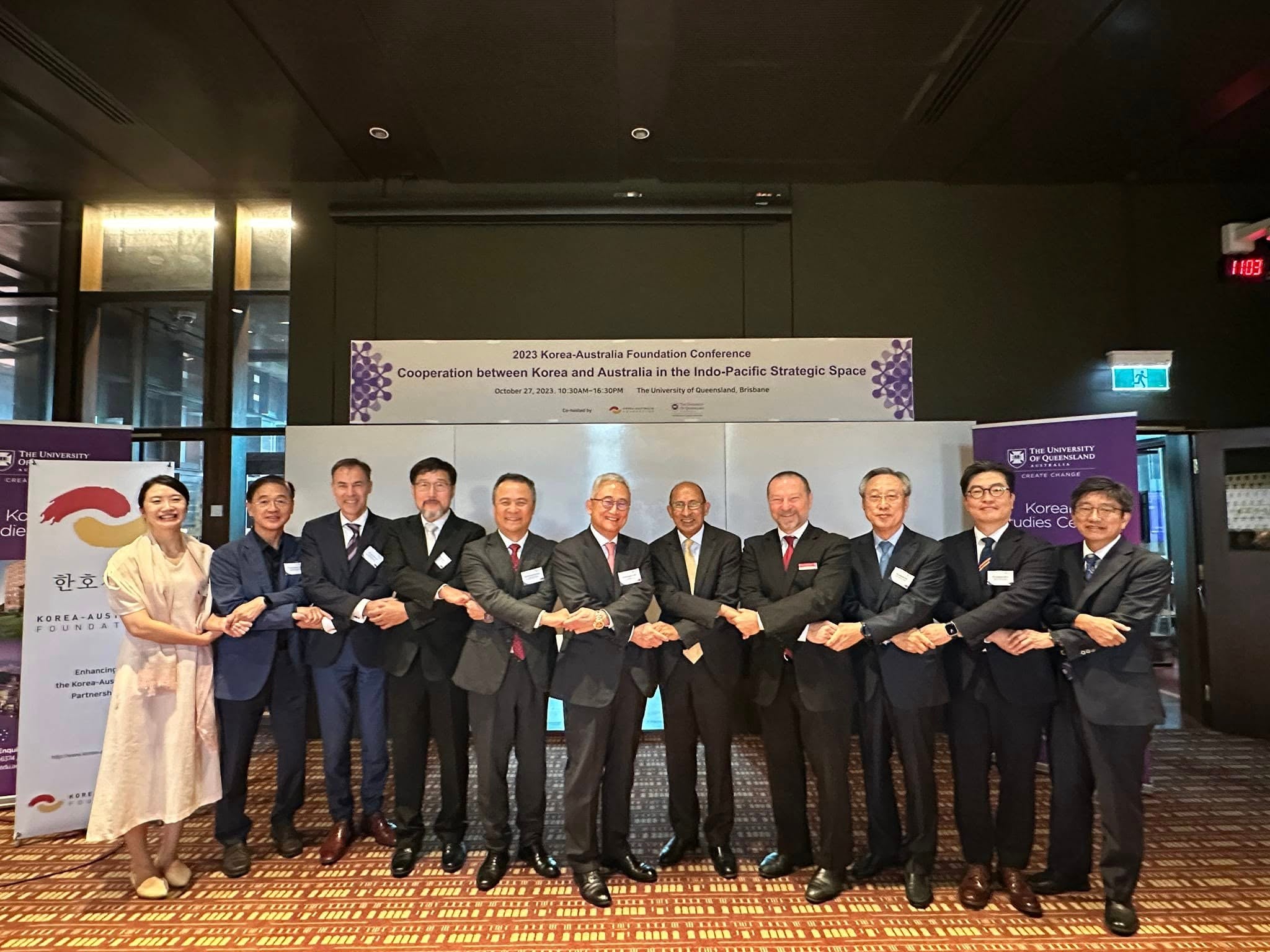 연세대학교 호주학센터
The Centre for Australian Studies (CAS) at Yonsei University
2023 Korea-Australia Foundation Conference (English)
21 February 2023
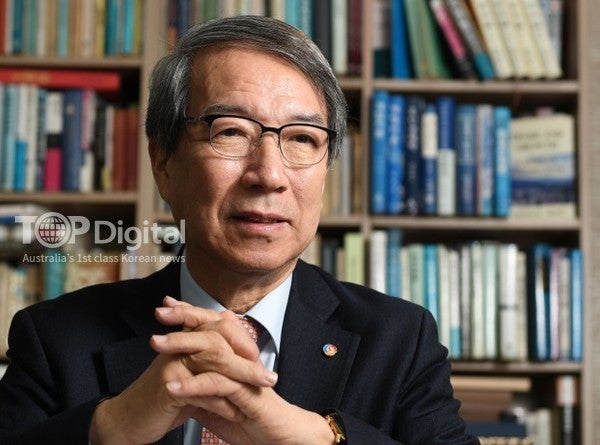 호주 톱뉴스 Australian TOP News
정운찬 전 국무총리, 호주서 국제 정세 강연회 (Korean)
22 December 2022
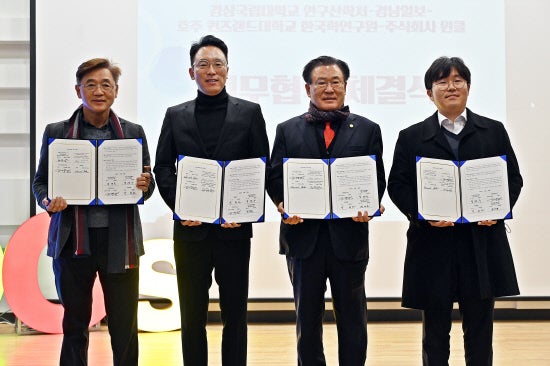 경남일보 Gyeongnam News
제1회 GNU-SDGs 인터내셔널 포럼 개최 (Korean)
6 December 2022
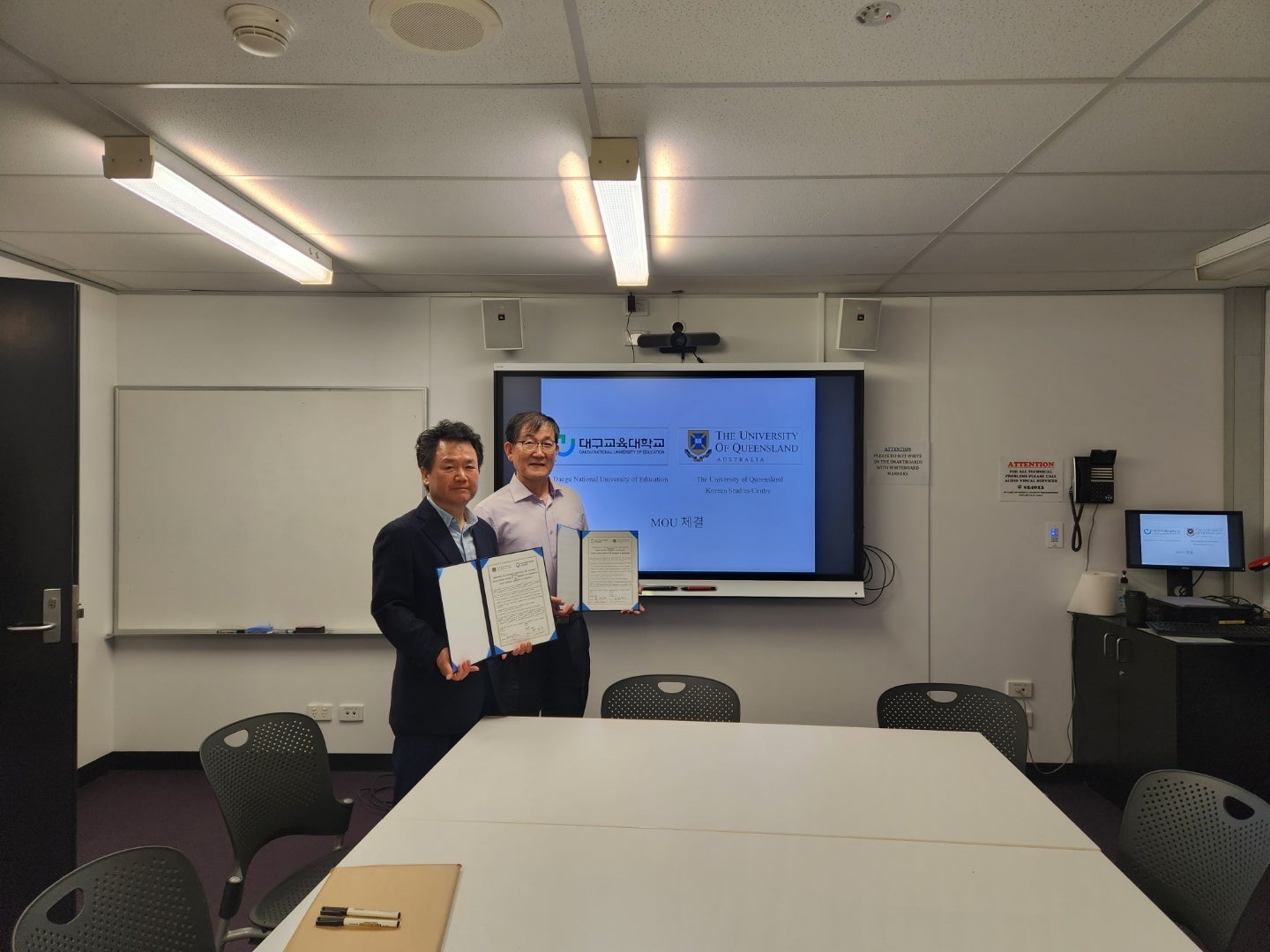 대구교육대학교
Daegu National University of Education
대구교육대학교-호주 퀸즐랜드 대학교 한국학센터(KSC) 학술대회 참석과 MOU체결 (Korean)
대구교대-호주 퀸즐랜드 대학교 한국학센터 상호협정 체결 (Korean)
22 September 2022
 경상국립대학교 Gyeongsang National University
경상국립대박물관-호주 퀸즈랜드대학교 한국학연구원, 업무협약 체결 (Korean)
24 April 2021
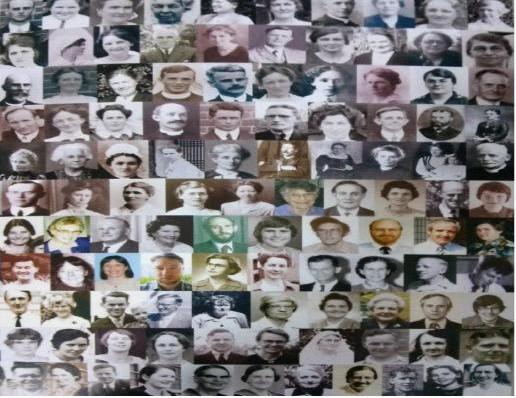 경남일보 Gyeongnam News
근·현대 발전에 기여한 호주 선교사들을 돌아보다 (Korean)
11 April 2021
YTN Korea
한국학 연구 30년, 세계로 나가는 한국을 알린다! (Korean)
1 March 2021
 민주평화통일자문회의
The National Unification Advisory Council
아시아·태평양지역회의 온라인 학술 토론회 - 창의적인 중견국 외교로 새로운 국제질서 마련해야 (Korean)
9 February 2021
 재외동포신문 Overseas Korean News
민주평통 아태지역회의, 호주 퀸즐랜드대학과 온라인 학술토론회 개최 (Korean)
13 February 2020
 SBS Australia
UQ launches Korean Studies Centre to boost research into Korean peninsula (English)
퀸슬랜드 대, 한국학 연구소 출범...‘포괄적 한반도 평화 연구’ 주도 기대 (Korean)
11 February 2020
 연합뉴스 Yonhapnews
대양주 한인 최대기업 후원' 호주 퀸즐랜드 한국학 연구소 개소 (Korean)
7 February 2020
 주호주 대한민국 대사관
Embassy of the Republic of Korea in Australia
퀸즐랜드대학교 한국학센터 개원식 참석 (Korean)